
WAQAR-E-PAKISTAN
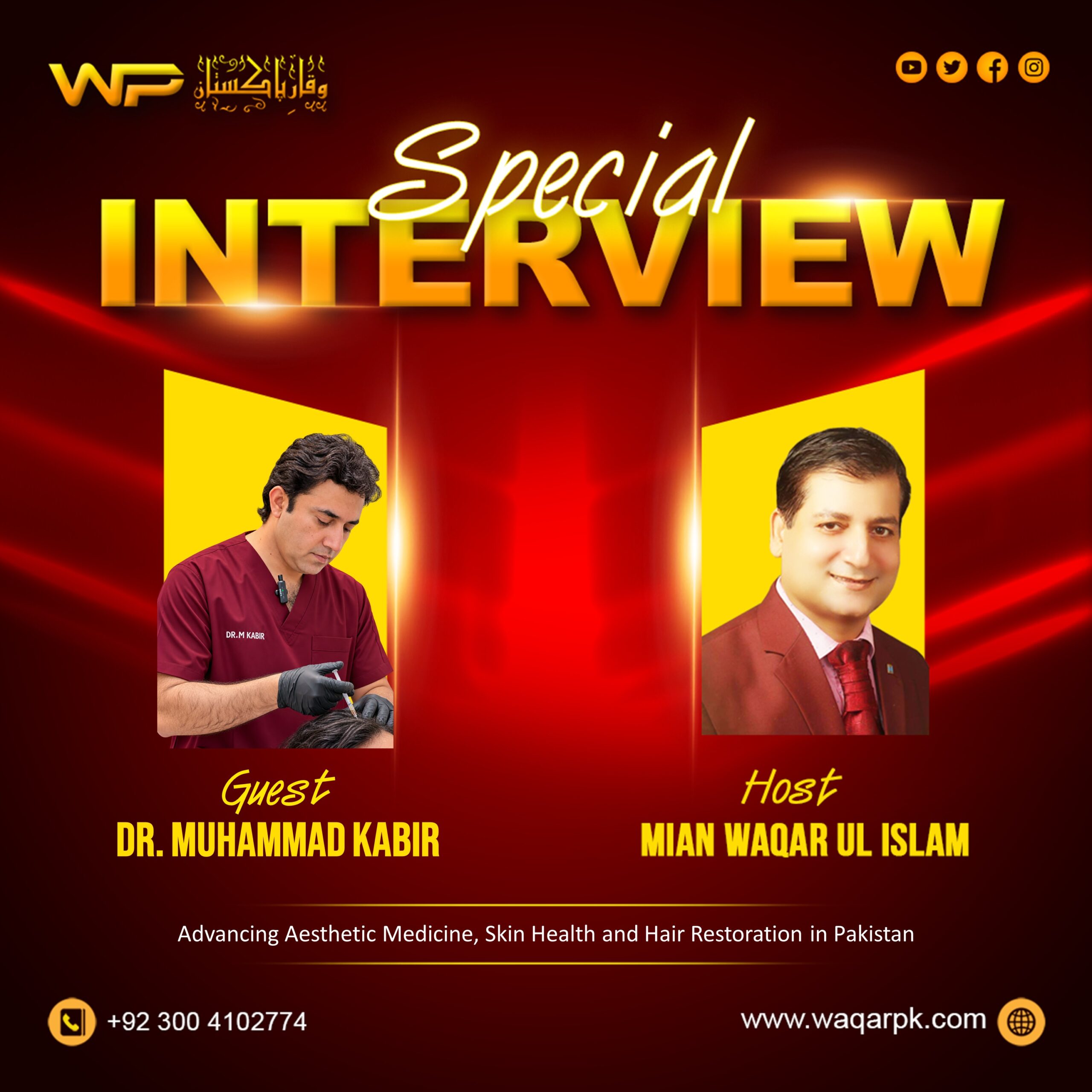
Dr. Muhammad Kabir
The Science of Aesthetic Medicine
Beyond Beauty: Skin Confidence, Hair Restoration and the Future of Aesthetic Care in Pakistan
A Special In-Depth Interview with Mian Waqar ul Islam
Founder, Waqar-e-Pakistan Literary Research Cloud
Featuring: Dr. Muhammad Kabir
Associated with Multan Aesthetics, Multan, Pakistan
Published by: Waqar-e-Pakistan Literary Research Cloud
Explore more: https://www.waqarpk.com/
Where Medical Science Meets Confidence
Aesthetic medicine is about more than appearance. It brings together medical knowledge, evolving technology and deeply personal questions of skin health, hair restoration and self-confidence. From advanced laser procedures and skin rejuvenation to injectables and hair-loss treatments, new options continue to reshape the field—but choosing the right treatment requires sound judgement, honest guidance and a clear understanding of both benefits and risks.
In this special conversation, Mian Waqar ul Islam, Founder of Waqar-e-Pakistan Literary Research Cloud, speaks with Dr. Muhammad Kabir, associated with Multan Aesthetics, about the science and responsibilities behind modern aesthetic care. The interview explores common skin concerns, emerging technologies, facial aesthetics, hair restoration, patient safety and the future of the industry in Pakistan.
At its heart, this discussion asks an essential question: how can innovation serve patients responsibly? The answers emphasise informed choices, realistic expectations, ethical practice and the importance of placing patient welfare before trends or promotional promises.
The Interview
Part I — Professional Journey and Philosophy
1. Dr. Kabir, how would you introduce yourself and describe your professional interest in aesthetic medicine?
My professional interests include aesthetic medicine, skin health, facial rejuvenation and hair restoration. These areas bring together clinical knowledge, technology and an understanding of the concerns people may have about their skin, hair and appearance.
Aesthetic medicine is continually developing, so practitioners need to keep learning and critically evaluating new approaches. In my work associated with Multan Aesthetics, the focus is on understanding each person’s concerns, assessing whether a treatment is suitable and explaining the options available.
For me, responsible care begins with listening carefully, setting realistic expectations and helping patients make informed decisions.
2. What makes aesthetic medicine distinct from other areas of healthcare?
Aesthetic medicine combines clinical assessment and technical expertise with an understanding of a patient’s goals and expectations. People may seek help for acne scars, pigmentation, hair loss, signs of ageing or other appearance-related concerns, some of which can affect confidence and quality of life.
The practitioner’s responsibility is to balance the desired outcome with medical suitability, potential risks and realistic results. Treatment should never be recommended simply because it is popular. The decision must be based on the individual’s needs and the available evidence.
3. Which professional values should guide every aesthetic treatment?
Patient safety, informed consent, honesty and professional accountability should be fundamental.
Before treatment, patients should understand the expected benefits, limitations, potential risks, recovery requirements, likely costs and available alternatives. They should have time to ask questions and should never feel pressured into a procedure.
Practitioners must also recognise the limits of their training and refer patients when another specialist’s assessment is needed. Patient welfare must take priority over commercial interests.
Part II — Modern Skin Care and Treatment Choices
4. How has aesthetic medicine changed in recent years?
The field now includes a wider range of technologies and procedures, including laser-based treatments, energy-based devices, injectables, skin-rejuvenation approaches and hair-restoration options. Digital platforms have also made information more accessible.
However, online content can mix useful education with exaggerated claims, selective before-and-after images and unrealistic promises. Patients need clear explanations that distinguish established evidence from early research or marketing.
Technology is valuable only when the device and procedure are appropriate for the patient, the practitioner is properly trained, and suitable safety and follow-up arrangements are in place.
5. How should patients distinguish everyday skincare from medical aesthetic treatment?
Everyday skincare commonly involves cleansing, moisturising, sun protection and suitable over-the-counter products. Medical aesthetic care may require clinical assessment and can include prescription treatments, chemical peels, lasers, injectables or procedures for particular skin conditions.
The distinction matters because some procedures carry significant risks and require specific training, medical oversight or suitable facilities. Patients should ask who will perform the treatment, what qualifications are relevant and how complications would be managed.
6. What skin concerns are commonly assessed in aesthetic clinics?
People may seek assessment for acne, acne scarring, pigmentation, uneven skin tone, changes in skin texture, fine lines, unwanted hair and other signs of ageing.
There is no single treatment that suits every concern. The right approach depends on the underlying cause, skin type, medical history and other individual factors. Pigmentation, for example, can have several causes, and a procedure that helps one condition may be unsuitable for another.
A proper assessment should come before choosing a treatment based on popularity or social-media recommendations.
Part III — Acne Scars, Pigmentation and Rejuvenation
7. What options may be considered for acne scars?
Acne scars differ in shape, depth and structure. Some are depressed, some are raised, and others are accompanied by changes in pigmentation. Treatment therefore needs to be tailored to the scar type and the patient’s skin characteristics.
Depending on the assessment, options may include selected topical treatments, chemical peels, microneedling, subcision, laser procedures or a combination of approaches. Subcision may be considered for certain depressed scars associated with fibrous attachments beneath the skin, but it is not suitable for every scar.
Improvement usually takes time, and complete removal cannot be guaranteed. Patients should understand the likely benefits, limitations, costs, downtime and possible complications before starting treatment.
8. What should people know about pigmentation and uneven skin tone?
Pigmentation may be associated with sun exposure, inflammation, hormonal influences or particular skin conditions. Identifying the likely cause is important because different conditions require different management.
Sun protection is an important part of managing many pigmentation concerns. Depending on the assessment, a clinician may consider topical products, chemical peels or selected laser procedures. Some aggressive or unsuitable treatments can worsen pigmentation, particularly when skin type and risk factors are not considered.
Patients should be cautious of unregulated products and promises of instant, permanent results.
9. Are glow facials and skin-rejuvenation treatments suitable for everyone?
No. Suitability depends on the person’s skin condition, sensitivity, medical history and goals. Some cosmetic facials may temporarily improve hydration or the appearance of the skin, but they should not be presented as solutions for every dermatological concern.
People with active irritation, skin disease or other relevant conditions may need assessment before a procedure. Clinics should explain what a treatment can reasonably achieve, whether maintenance is needed and what aftercare may be required.
Part IV — Lasers and Emerging Technologies
10. What should patients understand about picosecond laser technology?
Picosecond lasers deliver very short pulses of energy and may be used for selected indications, including certain pigmentation concerns and tattoo removal. The suitability of a device depends on the specific condition, the device’s characteristics and the treatment protocol.
The term “pico laser” does not mean that every device or procedure is appropriate for every skin concern. Patients should ask why the treatment is being recommended, what evidence supports its use for their condition, how many sessions may be needed and what risks or aftercare requirements apply.
11. What role can carbon peels and other laser-based facial procedures play?
Carbon-peel procedures combine a carbon-based topical preparation with a laser protocol and are used for selected cosmetic goals. Other laser procedures are designed for different indications, so their effects should not be treated as interchangeable.
The appropriate choice depends on the concern being treated, the equipment and protocol used, and the patient’s skin characteristics. Before proceeding, patients should receive a clear explanation of likely benefits, limitations, possible side effects and aftercare.
12. How should patients evaluate HIFU, plasma pens and other advanced devices?
Patients should look beyond promotional names and ask what a device is intended to do, whether it is appropriate for their concern, what evidence supports the treatment and what risks it carries.
High-intensity focused ultrasound (HIFU) has selected aesthetic applications, but results vary and it is not a substitute for every surgical or non-surgical procedure. Plasma-pen-style treatments may carry risks that include burns, scarring and pigmentation changes.
New technology should be adopted on the basis of suitable evidence, practitioner competence and patient safety—not novelty or advertising alone.
Part V — Injectables and Facial Aesthetics
13. What should patients know before choosing botulinum toxin or dermal fillers?
Botulinum toxin products and dermal fillers serve different purposes. Certain botulinum toxin treatments temporarily reduce the activity of selected muscles, while fillers may be used to restore volume or alter particular facial contours.
Neither is risk-free. Potential complications depend on the product, injection site and patient, and some complications can be serious. Patients should confirm the practitioner’s qualifications, ask which product is being used, understand the treatment plan and know what arrangements exist for managing complications.
They should also receive realistic information about expected results, duration, maintenance, cost and alternatives.
14. How should practitioners approach demand for lip fillers and facial contouring?
Demand is influenced by changing beauty preferences, social media and greater awareness of non-surgical procedures. However, facial aesthetics should not simply follow trends or impose the same appearance on everyone.
A suitable plan takes account of the person’s anatomy, medical history, preferences and expectations. Conservative planning, clear communication and informed consent help ensure that the decision reflects the patient’s needs rather than external pressure.
15. What helps achieve natural-looking results?
Natural-looking results depend on careful assessment, sound anatomical knowledge, appropriate technique and restraint. Not every line, contour or variation needs treatment.
Practitioners should explain what is achievable and avoid encouraging unrealistic expectations. They should offer professional guidance while respecting the patient’s autonomy and ensuring that any decision is informed and voluntary.
Part VI — Hair Loss and Hair Restoration
16. What should someone consider before deciding on a hair transplant?
The first step is to establish the likely cause of hair loss. Different forms of hair loss may need different management, and transplantation is not suitable for everyone.
Assessment may consider the pattern and progression of hair loss, scalp condition, donor-hair availability, family history, medical factors and the person’s expectations. Patients should ask who will perform the procedure, what responsibilities the surgeon and supporting team will have, what risks are involved and what follow-up care is available.
A hair transplant is a medical procedure, not simply a cosmetic purchase.
17. What should patients expect during recovery after a hair transplant?
Recovery and hair growth take place in stages. Some transplanted hairs may shed during the early recovery period, while visible new growth generally takes months rather than days. The time needed to assess the outcome varies, and the final appearance may take around 9–12 months or longer.
Patients should follow their treating clinician’s instructions for scalp care, washing, activity and follow-up. They should also understand that transplantation does not prevent every form of future hair loss.
18. What are PRP and PRGF, and what should patients ask about them?
Platelet-rich plasma (PRP) is prepared from a patient’s blood and contains a concentration of platelets. Plasma rich in growth factors (PRGF) refers to a related group of preparations that use particular processing methods.
Protocols and supporting evidence can differ, and outcomes are not guaranteed. Patients should ask how the preparation is produced, what evidence supports its use for their condition, what limitations apply and whether it is proposed as a stand-alone treatment or part of a broader plan.
19. What should the public know about exosomes, PDRN, peptides and other emerging products?
These products have attracted interest because of research into cellular signalling, tissue repair and regenerative approaches. However, the evidence, regulatory status and permitted uses vary considerably by product and jurisdiction.
Marketing claims may go beyond what reliable clinical evidence can establish. Patients should ask about product origin, quality controls, regulatory status, available research and possible adverse effects. Practitioners should be transparent about uncertainty and avoid describing a product as a proven cure or guaranteed treatment without adequate evidence.
Part VII — Safety, Ethics and Patient Trust
20. What risks arise when patients choose treatment mainly on price or social-media advertising?
Price and promotional offers do not establish the quality or safety of a procedure. Risks may arise from unqualified providers, unsuitable treatments, counterfeit or inappropriate products, inadequate assessment or poor follow-up.
Before proceeding, patients should verify relevant credentials, ask about the equipment or product, understand the consent process and receive clear aftercare instructions. They should also know whom to contact if a complication develops.
21. What does meaningful informed consent involve?
Informed consent is more than signing a form. Patients should understand the purpose of a procedure, its expected benefits, significant risks, alternatives, limitations, recovery period and costs. They should be able to ask questions and make a voluntary decision.
Honest communication also means acknowledging that a procedure may not achieve the desired result. A responsible practitioner should be prepared to advise against treatment when the likely benefit does not justify the risks.
22. How should clinics manage aftercare and patient concerns?
Clinics should have clear processes for follow-up, clinical documentation, responding to complaints and escalating medical concerns. Patients should know which recovery effects may be expected, which symptoms need urgent assessment and how to contact the responsible clinician.
When a concern is raised, the response should be timely, respectful and focused on understanding the problem. Aftercare is an essential part of the treatment pathway, not an optional extra.
Part VIII — The Aesthetic Industry in Pakistan
23. What opportunities and responsibilities do you see for aesthetic medicine in Pakistan?
Interest in skincare, hair restoration and cosmetic services has grown alongside greater public awareness, digital communication and access to new technologies. This creates opportunities, but sustainable development requires more than equipment purchases or online promotion.
The sector needs competent practitioners, appropriate facilities, reliable products, ethical communication and continuing professional education. Clinics that place patient welfare and long-term trust at the centre of their work can help strengthen public confidence in the field.
24. What helps an aesthetic clinic build a trustworthy professional reputation?
Trust can be undermined when advertising presents results as immediate, effortless or permanent, even though actual outcomes vary. Other challenges include maintaining staff competence, investing in training and equipment, managing expectations and providing consistent follow-up.
A credible professional reputation is built through accurate communication, respect for patient privacy, responsible handling of feedback and consistent standards of care. Advertising can inform the public, but it cannot replace professional accountability.
25. How can digital platforms improve patient education without misleading the public?
Digital platforms can explain procedures, address common misconceptions, share general aftercare guidance and encourage people to seek qualified advice. They can also spread misinformation when images are edited, lighting changes the apparent result or exceptional outcomes are presented as typical.
Online information should not replace an individual consultation. Educational content should distinguish evidence from promotion and protect identifiable patient information unless appropriate consent has been obtained.
Part IX — Research, Training and the Future
26. Why are research and continuing professional development important in aesthetic medicine?
Aesthetic medicine continues to evolve, so practitioners need to follow relevant clinical evidence, safety guidance, technological developments and professional standards.
Continuing education helps clinicians assess new treatments critically rather than adopting them simply because they are popular. Research literacy is especially important for emerging products and procedures where evidence may be limited. Professional development should strengthen practical competence, patient safety and the ability to change practice when better evidence becomes available.
27. How might aesthetic medicine develop over the next five to ten years?
The field may see further development in personalised treatment planning, imaging and assessment tools, laser technologies, and approaches to skin and hair care. Artificial intelligence may support selected tasks, such as image analysis, documentation and patient communication, but it should support—not replace—qualified clinical judgement.
Progress will also depend on stronger evidence, responsible oversight, transparent communication and systematic monitoring of outcomes. Innovation will be most valuable when it improves care while maintaining patient safety.
28. What advice would you offer doctors who want to enter aesthetic medicine?
Build a strong foundation in medical knowledge and clinical assessment before focusing on cosmetic procedures. Seek recognised training, supervised practical experience and a thorough understanding of anatomy, contraindications and complications.
Do not allow commercial pressure or social-media trends to dictate clinical decisions. Learn to communicate uncertainty, recognise the limits of your competence and refer patients when necessary. Long-term success should be measured not only by business growth, but also by ethical conduct, patient safety and quality of care.
Part X — Personal Philosophy and Closing Message
29. What does professional success mean to you?
Professional success combines competence, integrity, continuous learning and responsible service. Every patient has different circumstances and expectations, so practitioners must listen carefully, recommend appropriate options and communicate honestly about what a treatment can and cannot achieve.
A strong professional reputation grows when patients feel respected, understand their choices and receive appropriate care throughout the treatment process.
30. What final advice would you give to people considering an aesthetic procedure?
Treat an aesthetic procedure as an informed healthcare decision, not an impulsive purchase. Understand your concern, verify the practitioner’s relevant qualifications, ask about evidence and risks, and take time to consider the available options.
No single procedure is right for everyone. Responsible care begins with an individual assessment, honest information and a shared commitment to safety.
Closing Note from the Interviewer
Aesthetic medicine sits at the intersection of healthcare, technology and changing social expectations. As the field develops, access to reliable information, responsible clinical practice and open professional dialogue becomes increasingly important.
Through this interview, Waqar-e-Pakistan Literary Research Cloud aims to encourage informed public discussion about skin health, aesthetic medicine, hair restoration and the responsibilities that accompany medical innovation.
We thank Dr. Muhammad Kabir for sharing his professional perspective and contributing to this discussion of the issues shaping this evolving field.
Mian Waqar ul Islam
Founder, Waqar-e-Pakistan Literary Research Cloud
Publication: Waqar-e-Pakistan Literary Research Cloud
Website: https://www.waqarpk.com/