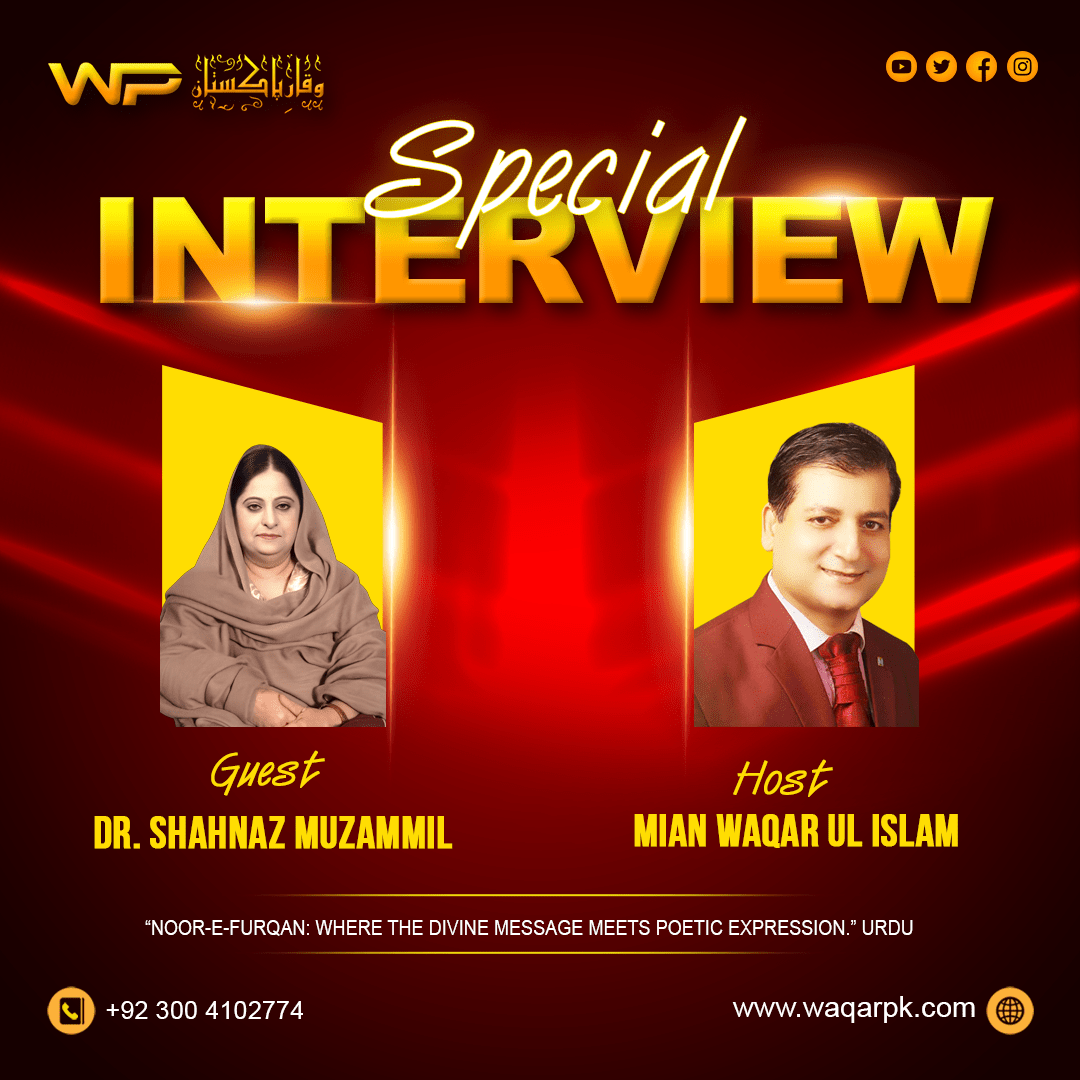

🎙️ SPECIAL INTERVIEW
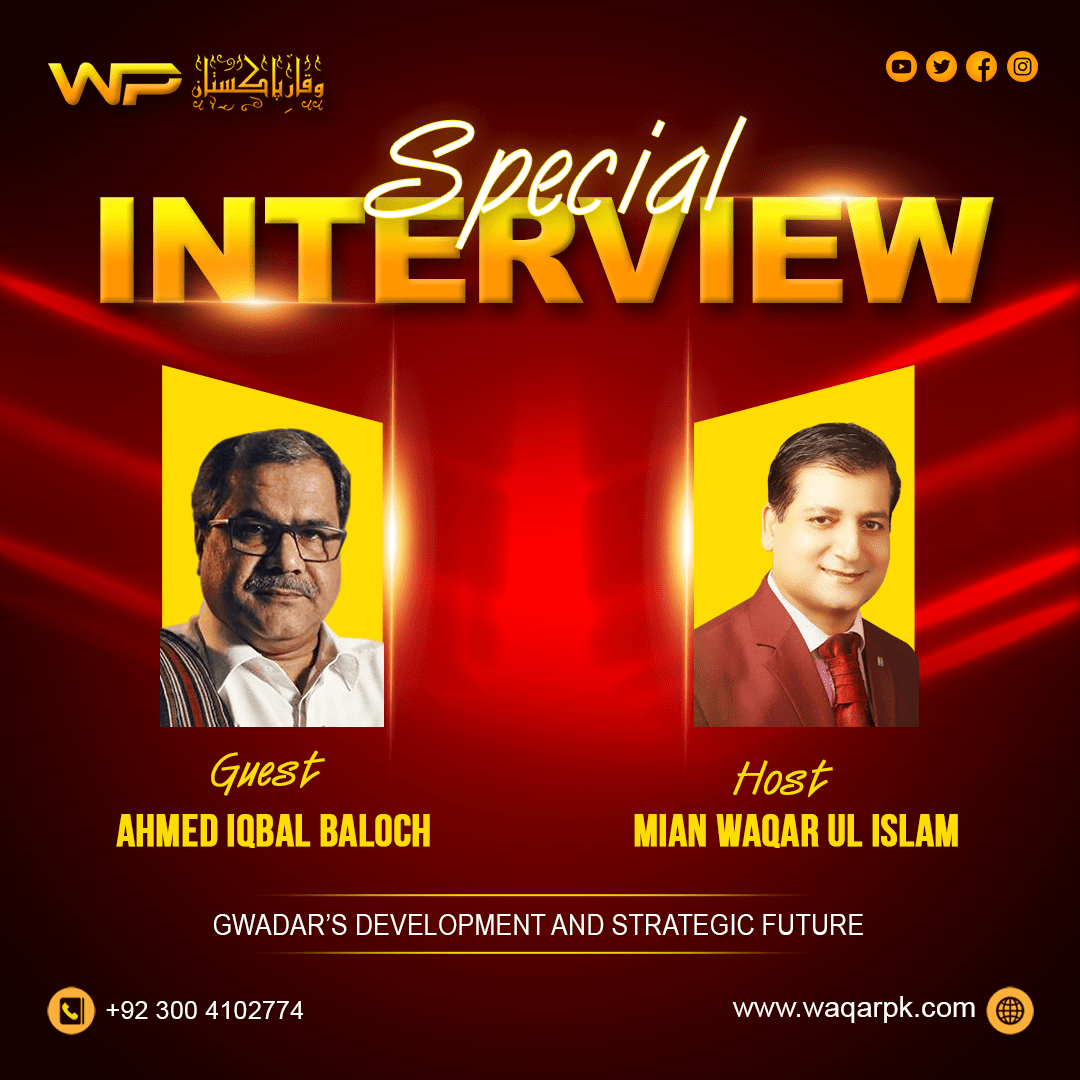
🌍 Gwadar in the Current Geopolitical Scenario
Guest: Basit Mahmood Malik
Chairman – GlobBiz Group
Secretary General – GBDA
Host: Mian Waqar ul Islam
Founder – Waqar-e-Pakistan Literary Research Cloud
Introduction
In today’s rapidly evolving geopolitical landscape, strategic infrastructure, maritime connectivity, and regional trade corridors have become central to global economic competition. Gwadar, located on the Arabian Sea, has emerged as one of the most discussed strategic locations in South Asia.
To better understand Gwadar’s significance in the current global scenario, we spoke with Basit Mahmood Malik, Chairman of GlobBiz Group and Secretary General of GBDA, who has been actively involved in Gwadar’s development for over two decades.
Professional Journey and Business Background
Mian Waqar ul Islam:
Please give us an introduction to yourself and your company.
Basit Mahmood Malik:
I completed my MBA and began my business career in the United Kingdom in 2000. In 2005, I returned to Pakistan and joined GlobBiz Group, which had started its real estate operations in Gwadar in 2004.
One of our flagship developments was GlobBiz Avenue, a housing project located adjacent to the Central Business District (CBD) designated by the Gwadar Development Authority (GDA). The project is considered one of the landmark developments in Gwadar.
I served as Project Director until 2022, after which I was entrusted with the responsibility of serving as Chairman and CEO of the Group.
Gwadar and the Emerging Global Order
Mian Waqar ul Islam:
How important is Gwadar in the current global geopolitical environment?
Basit Mahmood Malik:
Gwadar sits at the crossroads of South Asia, Central Asia, and the Middle East. At a time when global trade routes are being redefined, strategically located ports have become valuable geopolitical assets.
Gwadar provides Pakistan with greater maritime depth, enhanced regional connectivity, and access to emerging international trade opportunities.
Strategic Importance in the Arabian Sea
Mian Waqar ul Islam:
How does Gwadar connect with regional trade competition in the Arabian Sea?
Basit Mahmood Malik:
The Arabian Sea is witnessing increased strategic and economic activity. Gwadar’s proximity to major international shipping lanes enhances Pakistan’s strategic position and provides an alternative logistics and trade hub within the region.
Its location offers significant opportunities for future maritime commerce and regional integration.
Gwadar and CPEC
Mian Waqar ul Islam:
What is Gwadar’s role in the China-Pakistan Economic Corridor (CPEC)?
Basit Mahmood Malik:
Gwadar serves as the southern gateway of the China-Pakistan Economic Corridor (CPEC).
By connecting Western China to warm-water access through Pakistan, Gwadar helps reduce transportation distances and logistics costs. This linkage significantly enhances the city’s economic and strategic relevance.
Regional Diplomacy and Connectivity
Mian Waqar ul Islam:
How does Gwadar influence Pakistan’s regional diplomacy?
Basit Mahmood Malik:
Strategic infrastructure strengthens a country’s diplomatic position.
Gwadar increases Pakistan’s importance in regional discussions involving trade agreements, transit arrangements, economic partnerships, and broader connectivity initiatives across Asia and the Middle East.
Energy Security and Alternative Routes
Mian Waqar ul Islam:
With global energy routes under pressure, does Gwadar offer strategic alternatives?
Basit Mahmood Malik:
Yes, it does.
Gwadar’s proximity to the Strait of Hormuz gives it considerable strategic significance. It has the potential to function as an important logistics and energy corridor, supporting regional supply chain resilience and energy transportation networks.
Security and Sustainable Development
Mian Waqar ul Islam:
How does security impact Gwadar’s geopolitical role?
Basit Mahmood Malik:
Security and stability are fundamental requirements for long-term development.
A secure investment environment encourages international participation, strengthens investor confidence, and increases trust among regional stakeholders. Sustainable growth depends upon maintaining security alongside infrastructure development.
Future as a Regional Transshipment Hub
Mian Waqar ul Islam:
Can Gwadar become a regional transshipment hub?
Basit Mahmood Malik:
Absolutely.
With continued expansion of port operations and supporting infrastructure, Gwadar has the potential to facilitate trade flows between Central Asia, the Middle East, Africa, and South Asia.
This could position Pakistan as an important bridge connecting multiple regional markets.
International Investor Confidence
Mian Waqar ul Islam:
How does Gwadar influence international investors’ perception of Pakistan?
Basit Mahmood Malik:
Gwadar reflects long-term strategic planning and national vision.
When investors observe the development of ports, economic zones, transportation networks, and supporting infrastructure, it sends a positive message that Pakistan is investing in future growth and economic connectivity.
Resilience in a Changing World
Mian Waqar ul Islam:
In the context of shifting global alliances, how resilient is Gwadar’s development model?
Basit Mahmood Malik:
Gwadar’s greatest strength is diversification.
Its future is not dependent upon a single sector. The city integrates trade, logistics, real estate, fisheries, tourism, and industrial development. This diversified foundation increases resilience and supports long-term sustainability.
A Message for Pakistan
Mian Waqar ul Islam:
What message does Gwadar send to the Pakistani nation today?
Basit Mahmood Malik:
Gwadar represents strategic patience, long-term vision, and national ambition.
It demonstrates that nations build influence through infrastructure, continuity, planning, and investment in future generations. Gwadar is not an overnight success story—it is a transformational project whose impact will continue to unfold over decades.
Host’s Closing Reflection
Mian Waqar ul Islam
“In today’s complex geopolitical climate, Gwadar is not merely a city—it is a strategic statement.
Understanding Gwadar requires looking beyond daily headlines and focusing on the long-term shifts shaping global trade, regional connectivity, and economic development. As infrastructure, commerce, and diplomacy increasingly intersect, Gwadar stands as one of Pakistan’s most significant strategic assets for the future.”