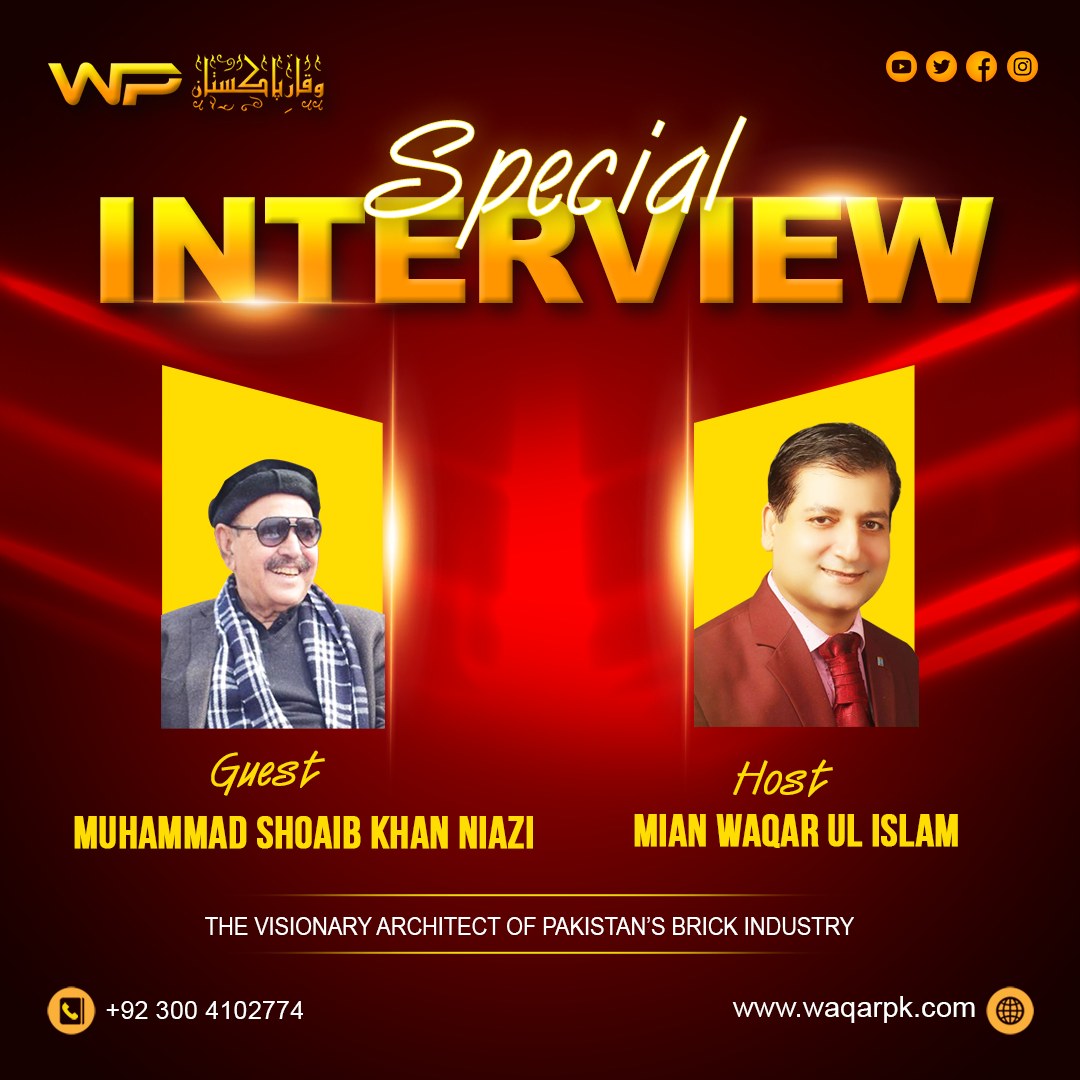
Special Interview
A Great Legacy of Leadership, Industrial Reforms, and National Development
Host: Mian Waqar-ul-Islam
Founder – Waqar-e-Pakistan
Guest: Muhammad Shoaib Khan Niazi
Chairman – Brick Kiln Owners Association Pakistan (BKOAP)
Chairman – Niazi Group of Companies (Pvt.) Ltd.
Introduction
Today, we have the honor of hosting a distinguished industrialist, reformist, and visionary leader whose contributions span more than six decades. Muhammad Shoaib Khan Niazi is widely recognized as one of the pioneers of Pakistan’s brick manufacturing industry and has played a transformative role in transport, logistics, real estate, infrastructure development, and the commercial expansion of Gwadar.
Within industrial circles, he is often regarded as a guiding figure whose leadership is respected across Pakistan’s brick kiln sector. Through his dedication to industrial organization, modernization, and policy advocacy, he has left a lasting impact on multiple sectors of the national economy.
Early Life and Entrepreneurial Foundations
Mian Waqar-ul-Islam:
Sir, you were born in Mianwali in 1942 and later migrated to Lahore. How did your early life shape your entrepreneurial journey?
Muhammad Shoaib Khan Niazi:
I was born on June 30, 1942, in Mianwali. I belong to the Niazi Pashtun tribe, which has long been settled in the region. After completing my early education in Mianwali, I moved to Lahore in 1958 and later earned a Bachelor of Arts (BA) degree from the University of the Punjab.
Our family was involved in agriculture, transportation, real estate, and construction. Growing up in that environment gave me practical exposure to business principles and entrepreneurship from an early age.
Entering the Brick Manufacturing Industry
Mian Waqar-ul-Islam:
You entered the brick kiln sector in 1966. What inspired this decision?
Muhammad Shoaib Khan Niazi:
In 1966, I established Niazi Bricks (Private) Limited. At that time, Pakistan’s construction sector was expanding rapidly. I recognized an opportunity to introduce organization, quality standards, and innovation into brick manufacturing. Over the years, Niazi Bricks evolved into one of the leading brick manufacturers in Pakistan.
Organizing the Industry at the National Level
Mian Waqar-ul-Islam:
You played a key role in creating and strengthening the Brick Kiln Owners Association Pakistan (BKOAP). How did that journey unfold?
Muhammad Shoaib Khan Niazi:
My vision was always to organize and strengthen the industry. In 1987, we began integrating brick kiln owners under a unified platform across Pakistan.
After decades of sustained effort, the organization was officially registered in 2020 with the Directorate General of Trade Organizations (DGTO) as the Apex Body representing Pakistan’s brick kiln industry. This recognition established BKOAP as the principal representative organization for brick kiln owners nationwide.
Today, the association operates through a structured governance system with offices in all four provinces, giving the industry an institutional presence comparable to major national business organizations.
Federal Representation and Policy Advocacy
Mian Waqar-ul-Islam:
How do you view the association’s role at the federal level?
Muhammad Shoaib Khan Niazi:
Following its recognition as an Apex Body, the association became a formal member of the Federation of Pakistan Chambers of Commerce and Industry (FPCCI).
Through this platform, we actively contribute to policy discussions, advocate for industrial interests, and work toward resolving issues faced by brick kiln owners. This has strengthened industry representation and helped safeguard stakeholders’ rights.
Legal Challenges and Industry Protection
Mian Waqar-ul-Islam:
Under your leadership, the association confronted several major legal challenges, including issues related to bonded labor and the advance payment system.
Muhammad Shoaib Khan Niazi:
Yes. During 1988–89, when the bonded labor case involving the brick kiln industry reached the Supreme Court of Pakistan, I strongly represented the industry’s perspective.
We argued that the advance payment system, commonly known as “Peshgi,” served practical economic purposes for both laborers and employers. The court ultimately acknowledged that the system required regulation rather than complete abolition.
Later, in 1992, when efforts were made to introduce legislation modeled directly on Indian frameworks, we highlighted the significant differences in economic and social realities between the two countries and advocated for policies tailored to Pakistan’s circumstances.
Standardizing Brick Sizes in Pakistan
Mian Waqar-ul-Islam:
You are credited with introducing standardized brick dimensions in Pakistan. Why was this reform important?
Muhammad Shoaib Khan Niazi:
Before standardization, bricks were produced in different sizes, creating inconsistency throughout the construction sector.
To address this issue, I worked closely with the University of Engineering and Technology (UET) Lahore and leading architects. Together, we developed standardized brick dimensions that later became widely recognized as the Niazi Brick Standards.
This initiative improved construction efficiency, technical consistency, and overall quality across the industry.
International Recognition and FABKA
Mian Waqar-ul-Islam:
Your contributions extend beyond Pakistan. Please tell us about your international initiatives.
Muhammad Shoaib Khan Niazi:
I always believed that Pakistan’s brick kiln industry should have a strong international presence.
In 2018, we helped establish the Federation of Asian Brick Kiln Associations (FABKA) in Kathmandu, Nepal. I am proud to be among its founding members. Today, our collaborative efforts are recognized across South Asia, including Nepal, Bangladesh, Sri Lanka, and India.
Environmental Reforms and ZigZag Technology
Mian Waqar-ul-Islam:
When environmental regulations became increasingly important, you championed the adoption of ZigZag technology. What was your experience?
Muhammad Shoaib Khan Niazi:
As environmental concerns intensified, many brick kilns faced operational challenges.
I advocated for the transition toward environmentally friendly kiln technologies. Under our leadership, Pakistan achieved remarkable progress in adopting ZigZag kiln technology, earning recognition throughout the region.
This technology significantly reduces emissions, improves fuel efficiency, and enhances production performance while supporting environmental sustainability.
Transport, Logistics, and Gwadar Development
Mian Waqar-ul-Islam:
Your business interests extend far beyond brick manufacturing. Could you tell us about your ventures in transport and Gwadar?
Muhammad Shoaib Khan Niazi:
In 1973, we launched Niazi Goods Transport, followed by the establishment of Niazi Express Bus Service in 1990.
Today, the transport network serves millions of passengers annually. Additionally, through Al-Noor Cargo City Gwadar, established in 2004, we contributed to the development and commercial growth of Gwadar Port City.
Throughout my career, my objective has remained consistent: to contribute positively to Pakistan’s economic development and long-term prosperity.
Closing Remarks
Mian Waqar-ul-Islam
The life and achievements of Muhammad Shoaib Khan Niazi reflect industrial vision, reform-oriented leadership, and a deep commitment to national development.
From introducing standardized brick dimensions and modernizing brick manufacturing practices to securing national-level industry representation and promoting environmentally sustainable technologies, his contributions have shaped generations of industrial growth in Pakistan.
This interview stands as a testament to perseverance, innovation, institutional development, and visionary leadership dedicated to the progress of the nation.
خصوصی انٹرویو
قیادت، صنعتی اصلاحات اور قومی ترقی کی ایک عظیم وراثت
میزبان: میاں وقار الاسلام
بانی – وقارِ پاکستان
مہمان: محمد شعیب خان نیازی
چیئرمین – برک کلن اونرز ایسوسی ایشن پاکستان (BKOAP)
چیئرمین – نیازی گروپ آف کمپنیز (پرائیویٹ) لمیٹڈ
تعارف
آج ہمیں ایک ایسی ممتاز شخصیت، اصلاح پسند اور بصیرت رکھنے والے رہنما کی میزبانی کا اعزاز حاصل ہے جن کی خدمات چھ دہائیوں پر محیط ہیں۔ محمد شعیب خان نیازی نہ صرف پاکستان کی اینٹوں کی صنعت کے بانیوں میں شمار ہوتے ہیں بلکہ ٹرانسپورٹ، لاجسٹکس، رئیل اسٹیٹ، انفراسٹرکچر ڈویلپمنٹ اور گوادر کی تجارتی ترقی میں بھی نمایاں کردار ادا کر چکے ہیں۔
صنعتی حلقوں میں آپ کو ایک ’’سایہ دار درخت‘‘ کی مانند سمجھا جاتا ہے، جس کی قیادت اور رہنمائی پر پوری پاکستانی بھٹہ صنعت اعتماد کرتی ہے۔
ابتدائی زندگی اور کاروباری بنیادیں
میاں وقار الاسلام:
سر، آپ 1942 میں میانوالی میں پیدا ہوئے اور بعد میں لاہور ہجرت کی۔ آپ کی ابتدائی زندگی نے آپ کے کاروباری سفر کو کس طرح متاثر کیا؟
محمد شعیب خان نیازی:
میں 30 جون 1942 کو میانوالی میں پیدا ہوا۔ میرا تعلق نیازی پشتون قبیلے سے ہے جو طویل عرصے سے میانوالی میں آباد ہے۔ ابتدائی تعلیم میانوالی میں حاصل کی اور 1958 میں لاہور منتقل ہوگیا۔ بعد ازاں پنجاب یونیورسٹی سے بیچلر آف آرٹس (BA) مکمل کیا۔
ہمارا خاندان زراعت، گڈز ٹرانسپورٹ، رئیل اسٹیٹ اور تعمیرات کے شعبوں سے وابستہ تھا۔ اسی ماحول نے بچپن سے ہی کاروباری سوچ، نظم و ضبط اور عملی تجربہ فراہم کیا۔
اینٹوں کی صنعت میں قدم
میاں وقار الاسلام:
آپ نے 1966 میں اینٹوں کے بھٹوں کے شعبے میں قدم رکھا۔ اس فیصلے کے پیچھے کیا سوچ تھی؟
محمد شعیب خان نیازی:
1966 میں میں نے ’’نیازی برکس (پرائیویٹ) لمیٹڈ‘‘ کی بنیاد رکھی۔ اس وقت تعمیراتی صنعت تیزی سے ترقی کر رہی تھی اور میں نے محسوس کیا کہ اینٹوں کی تیاری کے شعبے میں معیار، تنظیم اور جدت متعارف کروانے کی گنجائش موجود ہے۔
وقت کے ساتھ نیازی برکس پاکستان کے نمایاں اور معتبر اینٹوں کے مینوفیکچررز میں شامل ہوگئی۔
برک کلن اونرز ایسوسی ایشن پاکستان کا قیام
میاں وقار الاسلام:
آپ نے برک کلن اونرز ایسوسی ایشن پاکستان (BKOAP) کے ذریعے اس صنعت کو نئی شناخت دی۔ اس سفر کے بارے میں بتائیے۔
محمد شعیب خان نیازی:
میرا مقصد ہمیشہ اس صنعت کو منظم اور متحد کرنا تھا۔ 1987 میں ہم نے پورے پاکستان میں بھٹہ مالکان کو ایک پلیٹ فارم پر جمع کرنا شروع کیا۔
طویل جدوجہد اور مسلسل کوششوں کے بعد 2020 میں یہ تنظیم ڈائریکٹوریٹ جنرل آف ٹریڈ آرگنائزیشنز (DGTO) کے ساتھ پاکستان کی ’’ایپکس باڈی‘‘ کے طور پر رجسٹرڈ ہوئی۔
اس رجسٹریشن کے بعد یہ پاکستان بھر کے بھٹہ مالکان کی واحد مستند اور اعلیٰ نمائندہ تنظیم بن گئی۔ آج اس کے دفاتر چاروں صوبوں میں قائم ہیں اور یہ ایک منظم گورننگ باڈی کے تحت کام کر رہی ہے۔
وفاقی سطح پر نمائندگی
میاں وقار الاسلام:
وفاقی سطح پر اس تنظیم کی نمائندگی اور کردار کو آپ کیسے دیکھتے ہیں؟
محمد شعیب خان نیازی:
ایپکس باڈی بننے کے بعد ہماری تنظیم فیڈریشن آف پاکستان چیمبرز آف کامرس اینڈ انڈسٹری (FPCCI) کا باقاعدہ حصہ بن گئی۔
اس پلیٹ فارم کے ذریعے ہم پالیسی سازی، صنعتی مسائل کے حل اور بھٹہ مالکان کے حقوق کے تحفظ کے لیے مؤثر کردار ادا کر رہے ہیں۔ اس سے صنعت کو ایک مضبوط اور باوقار آواز ملی ہے۔
قانونی جدوجہد اور صنعت کا دفاع
میاں وقار الاسلام:
آپ کی قیادت میں ایسوسی ایشن نے بڑے قانونی معرکے بھی لڑے، خصوصاً بانڈڈ لیبر کیس اور پیشگی نظام کے حوالے سے؟
محمد شعیب خان نیازی:
جی ہاں، 1988-89 میں جب سپریم کورٹ میں پاکستان کی بھٹہ صنعت کے خلاف بانڈڈ لیبر کیس پیش ہوا تو میں نے صنعت کا بھرپور دفاع کیا۔
ہم عدالت کو یہ باور کروانے میں کامیاب ہوئے کہ ’’پیشگی نظام‘‘ مزدور اور مالک دونوں کی عملی ضرورت ہے۔ اس موقع پر چیف جسٹس افضل ظلہ نے اپنے فیصلے میں لکھا کہ اس نظام کو ختم کرنے کے بجائے ریگولرائز کیا جانا چاہیے۔
اسی طرح 1992 میں جب بھارتی قوانین کی طرز پر بانڈڈ لیبر قانون بنانے کی کوشش کی گئی تو ہم نے پاکستان کے زمینی حقائق کے مطابق اپنا مؤقف مؤثر انداز میں پیش کیا۔
پاکستان میں اینٹوں کے سائز کا معیار
میاں وقار الاسلام:
پاکستان میں اینٹوں کے سائز کو معیاری بنانے کا سہرا آپ کو دیا جاتا ہے۔ اس اصلاح کی اہمیت کیا تھی؟
محمد شعیب خان نیازی:
اس سے پہلے ملک بھر میں مختلف سائز کی اینٹیں تیار کی جاتی تھیں جس کی وجہ سے تعمیراتی شعبے میں یکسانیت موجود نہیں تھی۔
میں نے یونیورسٹی آف انجینئرنگ اینڈ ٹیکنالوجی (UET) لاہور اور معروف ماہرینِ تعمیرات کے ساتھ مشاورت کی۔ ہم نے اینٹوں کے معیاری سائز متعین کیے جو بعد ازاں ’’نیازی برکس اسٹینڈرڈز‘‘ کے نام سے معروف ہوئے۔
اس اقدام نے تعمیراتی صنعت میں معیار، ہم آہنگی اور تکنیکی بہتری کو فروغ دیا۔
بین الاقوامی خدمات اور FABKA
میاں وقار الاسلام:
آپ کی خدمات بین الاقوامی سطح پر بھی نمایاں ہیں۔ اس حوالے سے کچھ بتائیے۔
محمد شعیب خان نیازی:
میں ہمیشہ چاہتا تھا کہ پاکستان کی بھٹہ صنعت کو عالمی سطح پر نمائندگی حاصل ہو۔
اسی مقصد کے تحت 2018 میں نیپال کے دارالحکومت کھٹمنڈو میں ’’فیڈریشن آف ایشین برک کلن ایسوسی ایشنز (FABKA)‘‘ قائم کی گئی، اور مجھے اس کے بانی اراکین میں شامل ہونے کا اعزاز حاصل ہوا۔
آج پاکستان کے ساتھ ساتھ نیپال، بنگلہ دیش، سری لنکا اور بھارت میں بھی ہماری خدمات کو سراہا جاتا ہے۔
ماحولیاتی اصلاحات اور زگ زیگ ٹیکنالوجی
میاں وقار الاسلام:
ماحولیاتی ضوابط کے دوران آپ نے زگ زیگ ٹیکنالوجی کے فروغ میں اہم کردار ادا کیا۔ اس تجربے کے بارے میں بتائیں۔
محمد شعیب خان نیازی:
جب ماحولیاتی آلودگی کے باعث بھٹوں کی بندش کا سلسلہ شروع ہوا تو میں نے جدید اور پائیدار حل تلاش کیے۔
میں نے ایشیا بھر میں ماحول دوست بھٹوں کی جانب منتقلی کی قیادت کی۔ پاکستان نے میری رہنمائی میں زگ زیگ ٹیکنالوجی اپنانے میں نمایاں کامیابی حاصل کی۔
یہ ٹیکنالوجی فضائی آلودگی کم کرتی ہے، ایندھن کی بچت کرتی ہے اور پیداواری صلاحیت میں اضافہ کرتی ہے۔
ٹرانسپورٹ، لاجسٹکس اور گوادر
میاں وقار الاسلام:
آپ کا کاروباری دائرہ اینٹوں کی صنعت سے کہیں آگے تک پھیلا ہوا ہے۔ اس بارے میں کچھ بتائیے۔
محمد شعیب خان نیازی:
1973 میں ہم نے ’’نیازی گڈز ٹرانسپورٹ‘‘ کا آغاز کیا۔ بعد ازاں 1990 میں ’’نیازی ایکسپریس بس سروس‘‘ قائم کی، جو آج لاکھوں مسافروں کو سفری سہولیات فراہم کر رہی ہے۔
اسی طرح 2004 میں ’’النور کارگو سٹی گوادر‘‘ کے ذریعے گوادر پورٹ سٹی کی ترقی اور تجارتی سرگرمیوں میں حصہ لیا۔
میری ہمیشہ کوشش رہی ہے کہ پاکستان کی معاشی ترقی اور مستقبل میں اپنا مثبت کردار ادا کروں۔
اختتامی کلمات
میاں وقار الاسلام
محمد شعیب خان نیازی کی زندگی صنعتی بصیرت، اصلاح پسند قیادت اور قومی ترقی کے عزم کا عملی نمونہ ہے۔
اینٹوں کے سائز کو معیاری بنانے، صنعت کو جدید خطوط پر استوار کرنے، قومی سطح پر منظم نمائندگی فراہم کرنے اور ماحولیاتی اصلاحات کے فروغ تک، ان کی خدمات کئی نسلوں پر محیط ہیں۔
یہ انٹرویو پاکستان میں استقامت، جدت، اصلاحات اور دور اندیش کاروباری قیادت کی ایک روشن مثال ہے۔